Capture the application
Take over incoming applications from the portal, email or job platform.

Capture application documents, structure information, prepare appointments and communication – while selection decisions stay with the people responsible.
In short: AI can reduce administrative work in recruitment. It captures documents, structures data, matches requirements, prepares follow-up questions or appointment options and updates the status. Decisions about people are not delegated autonomously to the AI.
Take over incoming applications from the portal, email or job platform.
Capture the CV, employment references and cover letter in a structured way – with source references.
Structure education, experience and availability for comparison with the job requirements.
Prepare follow-up questions about missing documents or details.
Acknowledgement of receipt, appointment options and interim updates as drafts.
Keep the applicant tracking system and everyone involved up to date – after approval.
Examples from the workflow – no percentages, as only a measurement in your business can provide those.
| Situation | Today | With the solution |
|---|---|---|
| Receipt | email with three attachments | structured application file in the applicant tracking system |
| Overview | reading CVs one after another | summary with references to the documents |
| Appointment | five emails back and forth | appointment options prepared, confirmed by HR |
| Decision | with the people responsible | with the people responsible – unchanged |
Data capture, follow-up questions and appointments are prepared.
Missing documents are identified early.
Applicants receive a prompt reply.
Status and communication are traceable.
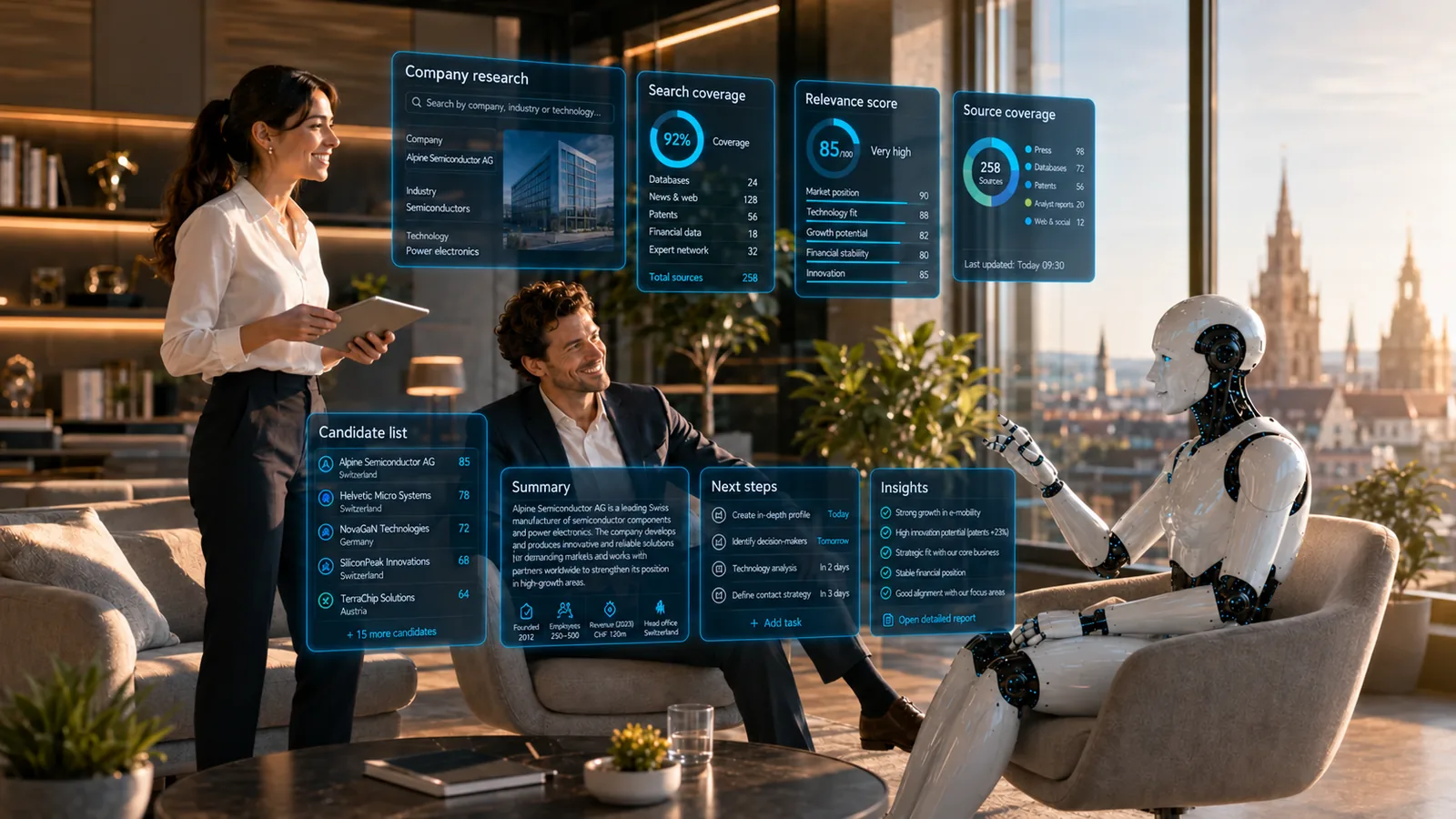
Sample images from our visual library – the interfaces shown are illustrations, not client data.


The selection and the final hiring decision. AI structures documents and prepares administration; it does not assess people autonomously.
The solution prepares, sorts and hands over – your staff make decisions and grant approvals, following rules you set.

For example – what exactly gets connected depends on interfaces and permissions and is checked in the AI potential assessment.
Solution building blocks are the technical components of the Swiss AI Platform, combined by process.
Read and structure application documents.
View building blockPrepare follow-up questions, appointment options and status.
View building blockHandover to the applicant tracking system and calendar.
View building blockDepending on the product and interfaces, we run the solution on your premises, in a Swiss cloud or as a combination. Before the pilot, we clarify data flows, access rights and compliance requirements. Background: Private AI and On-premise & hybrid (running on your own servers or a mix of both).
| Topic | Implementation |
|---|---|
| Data | Applicants’ personal data – particularly sensitive; data use and retention must be clearly governed. |
| Approvals | No automatic hiring or rejection decisions. Every external communication and every status change that affects applicants is approved. |
| Roles & permissions | Only the responsible HR team and the managers involved see application files. |
| Logging | Access, summaries and communication traceable for each application file. |
| Operating model | Running on your own servers or in a private cloud; data flows and model access are defined in the project. |
The pilot does not cover the whole process straight away. We pick a clearly defined part, set approvals and success criteria and test it with real data and the people who work with it. This approach is the same for every use case.
In the intended solution, the final hiring decision is not meant to be made autonomously.
Yes, provided interfaces and permissions allow it.
Yes, with clear source references to the application documents.
Companies with a regular flow of applications and an HR team that currently spends a lot of time on data entry, scheduling and status updates.
Describe your current workflow in two sentences. We check the benefit, data situation, integration effort and risks and show whether a product, a solution building block or a custom solution makes sense.